|
| Mobile BSL3 Medical and Vet Laboratories and N95 Masks |
Content:
Introduction | Functions | Diagnosis | Tests | Record Keeping
Immunizations and Surveys | Communications | Staff | Equipment and Supplies Standard Operational Procedures | Laboratory Manuals | Specifications
Other Facilities | Conclusion
>
|
INTRODUCTION
Increased Epidemiological appearances with high virulence danger (EBOLA , SARS, Asian flues, Cholera, Variola, TBC, Hepatitis, Bioterror Agents as well as Animal Diseases like FMD, Bovine TB, etc) requires increased intervention mobility directly in the infected areas, while respecting Biosafety rules and protecting fixed labs and facilities. One of the WHO priorities in the 3-rd Millennium is to improve and promote essential Health technologies applicable at the primary health care level.
Primary health care is conceived as a key approach to achieving health for all and must be implemented especially in the developing countries.
These strategies represent a comprehensive approach by the health sector to the promotion of health, prevention of disease, appropriate diagnosis, adequate treatment and measures for rehabilitation. For these strategies - preventive, promotive, diagnostic, therapeutic and rehabilitative components of health care, proper surveillance with a sound and efficient network of laboratories is essential. At present, Laboratory support at the Primary Health care level is not fully developed in the most developing countries and the programmes for continuous medical education and quality control are limited. In the case of emergencies like the present one in Asia , it is simply non adequate.
At the same time, several communicable diseases and especially new several emergent diseases are prevalent in these countries, in relation to which early diagnosis and well - defined laboratory - based epidemiological information could yield favorable results for the patient as well as the community, particularly at the peripheral level.
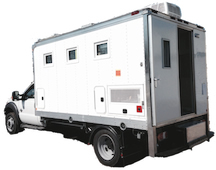
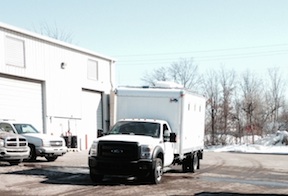
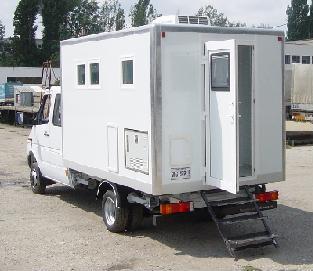
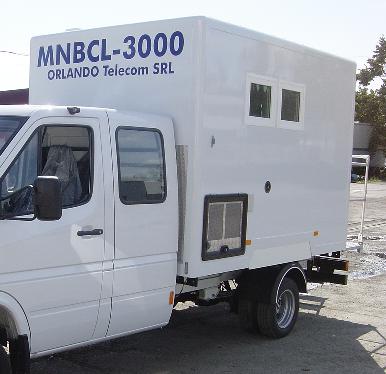
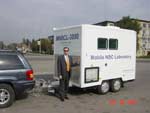
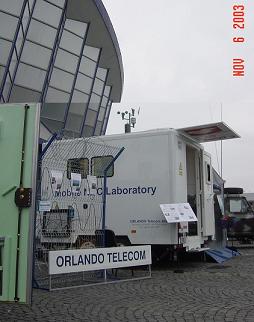
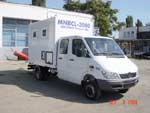
ORLANDO SYSTEM Inc., USA, member ABSA and EBSA, (with its division in Europe), which developed this project in 2001, now ORLANDO Systems LLC, is proposing a Programme for a network of MOBILE MEDICAL, BIOLOGICAL and VETERINARIAN LABORATORIES - Containerized [medical laboratory - standard and extended], independent, towed or installed on a 4 WD truck, boat or any other platform + as a part of a Mobile Laboratories Network in the Developing Countries and other areas.
The Strategy of the ORLANDO group is also to implement a Programme for training of the laboratory technologists and technicians for these Mobile Medical Laboratories, in the spirit of Good Laboratory Practice and Quality Assurance, up to BSL3 level. Such training can be accomplished in USA, Hungary or Italy in a high level training, approved facility.
TOP
|
|
| |
|
|
The Primary functions of the Mobile Laboratory are to assist in early and reliable Diagnosis, investigate outbreaks of disease, collect reliable Surveillance and Monitoring data for effective disease control and participate in the National Immunization Programmes of end-user nations.
The level of the Mobile laboratory must be equivalent in the "Standard version" to the Peripheral laboratory, and in its "Expanded version" to the Intermediate laboratory. Usage of Rapid Tests in the Mobile Peripheral laboratories will allow prompt patient management and better disease surveillance as primary health care.
The OSL Mobile BSL3+ Laboratories and Clinics will also support the control of the quality of water and food, the environmental pollution and its hazards and, if possible, monitor the various vertical national health programmes. One of the special tasks of Mobile laboratory is to participate to the control of bioterrorism - diagnosis and collection of specimens from area concerned by bioterrorism.
Some of the Identifiable diseases are: COVID-19, Coronavirus, EBOLA, SARS, MERS, HIV, Variola, Malaria, Cholera, Tuberculosis, Polio, West Nile , Hepatitis, Anthrax, Ebola, Botullinic Toxin and most Animal diseases like FMD, Bovine TB, etc. Control of epidemic conditions like EBOLA, SARS, as far as human or animal farm infections are fully considered as part of this project, started in November 2001. The present requirements for protections for EBOLA, SARS (as of April 27th, 2003 and 2004) and MERS are met. Avian flu H types so far (5/2020) are also met.
The Mobile Medical Laboratory networks should be an integral part of National Health Service, and should be developed within its framework, in the pyramidal structure of laboratory network from the developing countries.
The level of the Mobile Medical Laboratory must be equivalent in the "Standard variant" to the peripheral laboratory, and in its "Expended variant" to the intermediate laboratory . Our lab project has gone a step further and raised the Safety Level to BSL2 as far the Hood and as some functions of the Lab itself. A low cost Level BSL3 model is also available.
In the organization of the Mobile Laboratory priority should be given to the appropriate technology and tests of clinical relevance, applicable to the local circumstances and conditions. Conventional laboratory tests, though sensitive and specific, are often time-consuming, difficult to perform and need many reagents and much and expensive equipments.
Therefore, there is a clear need to introduce more RAPID TESTING as simple, reliable, reproducible, and cost - effective via a Mobile delivery method. The introduction of RAPID TESTING in the Mobile Peripheral laboratories will allow prompt patient management and better disease surveillance, which will be a great support for primary health care.
Common diseases for which laboratories at this level can help include:
•Parasitic infections - malaria, filariasis, vaginal trichomoniasis, amoebiasis and other intestinal parasites;
• Bacterial infections - tuberculosis, leprosy, gonorrhea, meningitis, skin infections with phylogenic organisms;
• Fungal infections - candidiasis , superficial mycoses
• Viral infections - HIV , hepatitis viruses , EBOLA, SARS, MERS Avian Flu H2, H5, H7, etc ;
• Pathogens with potential use in bioterrorism - anthrax, Ebola (special additional equipment required), etc.;
• Noncomunicable diseases - anaemia , diabetes , eclampsia, etc
• New emergent pathogens;
For same of the infections, if facilities and reagents are limited, only sample collection and dispatch to intermediate/central laboratories will be possible, but only under SAFE conditions for workers and sample conservation alike (like fresh air HEPA intake/outtake filtering).
TOP
|
DIAGNOSIS
Diagnostic procedures available at this level depend on the resources, manpower and policies of the health services as well as the prevalent communicable and noncommunicable diseases. Appropriate technologies, need - based and comprehensively evaluated by the local health care services, should be used wherever possible.
ORLANDO Systems LLC and KFT general offer for the Mobile Medical and BIOLOGICAL Laboratory network project is:
- "standard variant"
- a " plain vanilla " system, with standard equipment and reagents (BSL1), about 3 to 3.5 meters, but with a limited cost; And an;
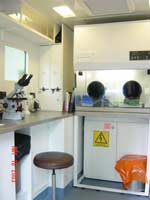
• " Extended variant " - longer, 3.5 to 4 meters, with a built-in Sample entry and Decontamination room, with optional equipments and reagents, with BSL3, with Negative pressure, HEPA air filtering available, etc.
• The applications are: for Human and/or Veterinarian use, Vaccinations, etc,
Basic microscopic examinations at the standard level may include the following
- Faeces for exudates [amoebic/bacillary dysentery], trophozoites, ova and cysts;
- Vaginal swabs - wet preparations for Trichomonas and Gram stained smears for candidiasis;
- Urethral discharge - Gram stained smears for gonococci;
- Sputum - Ziel Neelsen stained smears for acid fast bacilli;
- Skin - Ziel Neelsen stained smears for acid fast bacilli [AFB] and direct wet preparations for fungi;
- Nasal smears for AFB [Ziel Neelsen stain];
- Blood films for malarial parasites and microfilaria [Romanowsky stain];
- Urine deposits for cells, casts and parasites;
- Pus and exudates - Gram smears for bacteria;
- Cerebrospinal fluid [CFS] - Gram stained smears for bacteria, wet preparations for parasites and cell count in counting chambers:
- Semen examinations;
Clinical chemistry examinations should include the following:
• Urine examination for glucose, protein, ketones, bile pigments and salts; and pregnancy tests;
• Faeces for occult blood;
• Blood examination for glucose, protein, bilirubin, creatinine, etc
Hematology examinations should include the following
• Hemoglobin estimation;
• Total leukocyte counts;
• Differential white cells counts;
• Erythrocyte sedimentation rates [ESR];
• Packed - cell volume [PCV];
• Platelet counts;
• Raeticulocyte counts;
• Peripheral blood smears for cells morphology.
Serology for indirect identifications of infection, by means of determinations of antigens and / or antibodies, by rapid tests [including ELISA], for:
• Viral, bacterial and parasitic infections.
Additional examinations include those for water, food and environmental contaminations.
In some infections, referral to higher-level laboratories should include:
• Dispatch of faecal samples, for cultures, in suitable transport medium in cases of cholera, dysentery, diarrhea, etc.;
• Serum / blood samples for culture and serology;
• Water, food and environmental samples for analysis and culture;
• Dispatch of appropriate samples during outbreaks. Technicians at the periphery must be trained to respond rapidly and appropriately in cases of outbreaks.
All the above procedures require adequate training and experience in the standard procedures for collection, storage and transport of samples.
TOP
|
|
|
|
|
TESTS
Reliable, sensitive, specific, cost - effective and easily as well rapidly performed tests are particularly needed for the Mobile Laboratory activity. Newer techniques - latex agglutinations, co agglutinations, dipstick and conventional PCR, ELISA would be use.
TOP
|
RECORD KEEPING
This is essential for an efficient activity of the Mobile Laboratory - proper registers or electronic destination of data [dates, name, age, sex of patients, clinical diagnosis, results of tests, etc.]. In disaster areas, lost records need to be replaced, health maps and antibiotic resistance needs to be tested and recorded. Notebooks are suggested, with easy back-up, network and Communications connectable ports.
TOP
|
 |
|
|
|
IMMUNIZATIONS and SURVEYS
Mobile Laboratories should participate in national immunizations and monitoring vaccinations programmes and in surveys organized by intermediate, state / provincial and central laboratories or health care authorities.
TOP
|
COMMUNICATIONS
The Mobile Medical and Biological Laboratories shall have a proper communication system, GSM, Radio, Satellite and conventional, for voice, data, video - as well as a GPS unit - with the fixed, higher-level laboratories with regards to data collection, supervision and quality assurance. International connections will speed up help requests for diagnosis and verification.
TOP
|
|
 |
|
STAFF
The staff in the Mobile Laboratory / Peripheral level should have at least 2 people - 1 technologist/technician and 1 laboratory assistant/attendant/driver. The Mobile Laboratory extended peripheral [intermediate] level must include also - qualified pathologist / microbiologist / biochemist.
TOP
|
EQUIPMENTS / SUPPLIES
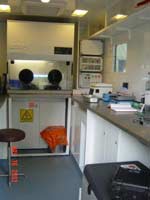
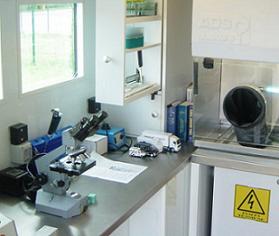
Some of the Necessary equipments and supplies (as recommended by our experts, but to be revised by the local end-users) can include:
• 1 binocular microscope with in built light ;
• 1 dark field microscope ;
• 1 centrifuge for vacutainers ;
• 1 hemoglobin meters ;
• 1 ESR stand ;
• 1 hemoanalyzer - 8/18 parameters [ optional ] ;
• 1 minianalyzer for chemical chemistry [ soft for 30-40 analyses ] - optional
• 1 reader ,1 washer and 1 incubator for ELISA serology - optional ;
• 4 automatic pipettes [ 20 + 50+ 250 m monocanal + multicanal 250 m ] and devices for pipeting ;
• 1 micro analyzer for radiation - optional;
• 1 micro analyzer for chemical weapons - optional;
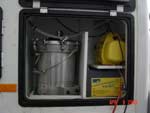
• 1 laminar flow cabinet ; Bio Safety Level II, or mobile BSL3- optional
• 1 Refrigerator - for samples ;
• 1 Refrigerator - for reagents and for vaccines - optional 2 ;
• 1 mobile freezer - for samples ;
• air conditioned system + HEPA filters for dust and BIOLOGICAL / chemicals - included with NEGATIVE Pressure;
• 1 computer [laptop] - optional
• reagents and kits for - microbiology , hematology , serology [Conventional , rapid and ELISA tests ] ;
• reagents and kits for - water , food and environmental analysis [ bacteriological and chemical assurance ];
• vaccines for National immunization programmes
• special supplies for sample collection , transport and storage ;
• culture and transport media for microbiology ;
• laboratory materials for single use ;
• sterilized syringes and needles [ single use ] ;
• sterile collection bottles and tubes for water, food and environmental analysis ;
• deionized / distilled water [ bottles ] ;
• Mobile Real Time PCR and Mobile ELISA tests equipment. Locally recommended supplies
TOP
|
 |
 |
|
STANDARD OPERATION PROCEDURES
• collection samples ;
• processing of samples ;
• storage samples ;
• all types of analysis ;
• epidemiological surveys ;
• investigation of outbreaks ;
• immunizations and monitoring vaccine response ;
• collection of data ;
• record keeping ;
• equipment maintenance ;
• laboratory maintenance ;
• decontamination / biosafety ;
• waste and contaminated / decontaminated disposal ;
• organization of quality assurance / internal quality control / external quality assessment ;
• guidelines for bio-safety ;
• Etc.
TOP |
LABORATORY MANUALS
LM should include organization, staff , laboratory techniques , preventive maintenance of equipment, quality assurance , biosafety, specimen collection and packaging, record keeping , ordering supplies, communication system and logistic support , safe management of environment, biosafety programmes, methods for identifying and correcting faults and difficulties, WHO standards, etc.
TOP
|
|
 |
|
Mobile Laboratories
TECHNICAL SPECIFICATIONS
Typical Lab Working SPACE:
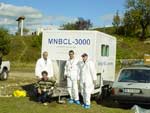
Standard: 2.00mH x 2.00mW x 3.00/3.50m Length
Expanded: 2.00mH x 2.00mW x 3.50/4.00m + Length |
Technical Data |
MBL-3000 |
MLEE-3500 MLEE-4000
MLBSL2-3500 |
MLEE-4000
Trailer |
Length |
3000mm |
3500mm and 4000mm |
4000mm |
Width |
2000mm |
2000mm |
2000mm |
Weight |
1700kg |
2000-3500kg |
2500-3500kg |
Special Missions |
Basic Medical, Biological Tests |
Epidemiological Interventions,
BSL2+, BSL3 High Risk, Veterinarian Apps and also for Bioterror |
Level BSL-2, 2+ 3, easily transportable sea/air, can be installed on any truck
|
|
 |
|
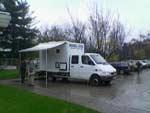
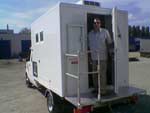
Mobile Medical and BIOLOGICAL Laboratories available are defined by size (3-6m long, 2x2m wide and tall), Biosafety Level 1-3 (Single and Dual rooms) and applications (Human and/or Veterinarian use, Vaccinations, etc). For Veterinarian applications, BSL3, please visit our site http://www.birdflulabs.com. For HEALTH applications, BSL2+ and BSL3, please visit our site http://www.orlandomedsys.com.
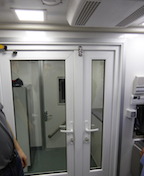
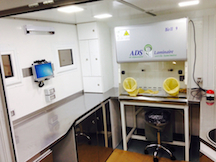
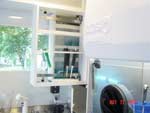
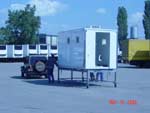
The ORLANDO Mobile Medical and Biological Laboratories are containerized, can be installed on self-supporting trailer with air-shocks or can be transferred to Transit type, 2 - 2.500kg capacity small trucks, ships, etc. It also has an optional large tent on the right side, with access to the 220VAC and 12VDC power outlets, as well as the Autoclave and Decontamination unit.
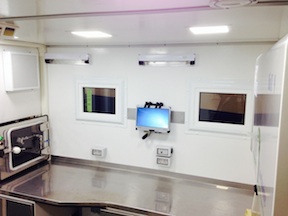
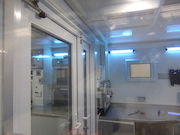
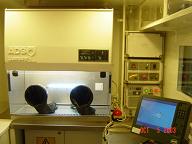
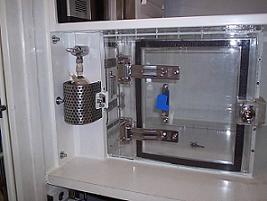
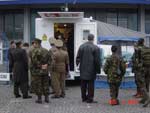
The Mobile Laboratories are also available with Positive or Negative pressure, Bio-Safety Level II Hood or a GLOVEBOX BSL3, with fresh air Bio HEPA filtering and can provide a Level II or III BioSafety level for the occupants and samples. The Mobile Medical Clinics for doctor examinations, diagnosis and some basic treatments are similar in technology, size and scope.
TOP
|
OTHER FACILITIES
Other facilities include a supply of safe Purified water, a reliable source of energy like a generator, Battery and solar cells. The systems also include sterilization/incineration and possible chemical disinfections facilities. Also included are transport and optional communication facilities between the Mobile laboratory and the higher-level laboratory for referral of samples and patients procurement of supplies and personal discussions (portable refrigerators).
TOP
|
 |
 |
|
CONCLUSION
Mobile Medical and BIOLOGICAL laboratories built to BSL2+ and BSL3 are of great use in Epidemiological or Bioterror situations requiring Biosafety in sample collection and analysis.
TOP
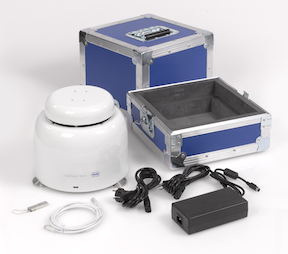
Our ORSAIR PhoenixDX 2019-NCOV is a real-time RT-PCR-based detection system for the 2019 Wuhan coronavirus (2019-nCoV). 2019-nCoV is considered a novel human coronavirus that is genetically distinct from the common human coronaviruses (229E, NL63, OC43, HKU1), which cause seasonal acute respiratory illness. It is also genetically distinct from the two newer human coronaviruses, MERS-CoV and SARS-CoV.
Our Test Kit (50 tests) ORSAIR PhoenixDX 2019-NCOV detects the presence of 3 different and highly specific gene sequences of 2019-nCoV: E gene, N gene and RdRP gene. All 3 assays must be tested positive to confirm the sample as 2019-nCoV-positive.
Additionally, a non-infectious positive control and a negative human extraction control are included. The positive control is used to confirm functionality of the assays and overall PCR performance, the negative human extraction control is included to evaluate the quality of the RNA isolation independently from the 2019-nCoV assays.The first step in the detection of 2019-nCoV is the conversion of viral RNA into cDNA. Afterwards, the target sequences unique for 2019-nCoV are specifically amplified with amplification monitored in real time through the use of fluorescently labelled probes: upon incorporation into the newly amplified DNA strands, the fluorophore (FAMTM) is released and an increase in fluorescence signal can be observed.
Due to the intrinsic mutation rate of coronaviruses, it is possible that mutations in the target sequence occur and accumulate over time. This can lead to false-negative results with a PCR- based detection approach. ORSAIR PhoenixDX 2019-NCOV addresses this issue by using 3 detection assays on 3 different target sequences to minimize the chance of false-negative results caused by an altered target sequence.
If samples are tested negative in one or more assays, additional complementary testing may be required. The original target sequences for 2019-nCoV are included as a non-infectious target positive control (TPC) to check the integrity of the detection assays.
sac prada like chatgpt chatgpt writing gucci things scrape followers instagram cookies bait and tackle lil tecca prada make up fx prada perfume sephora chatgpt plus price bondy bait prada milano logo captain hat prada 15 pv makeup effects native american amazing grace lyrics ugg online sale stores prada luna rose prada red sandals prada pr 15ys chatgpt что это south colby post office instagram followers 50 nike prada bill gates chatgpt gucci america fluffy prada bag prada kiss perfume specialty printing companies night of the demons nude prada small handbag nakrutka instagram followers prada bag original gucci cost prada nylon hat cardinal supply brown prada purse better than chatgpt balenciaga official site prada moccasin prada headband dupe south colby post office how do i get aaa travel books tamagotchi.com rosemont hours prada loafers style prada eyeglasses case catalina island poster spam followers instagram red prada dress prada dog bandana mens outlet stores ai bot chatgpt купить гуччи yokahama prada chatgpt nvidia board for wall prada lenscrafters brice mcmillan outlet mall online random instagram followers prada jeans womens dr jacob amrani prada glasses blue chatgpt poem jack spade brief balenciaga official site vintage prada sneakers valentine texas prada chatgpt chan silver prada sneakers prada little bag fashion outlets online neal.mccoy tour geoffrey johnson artist prices amy smart crank prada net worth chatgpt vs jasper nvidia chatgpt chatgpt write code chicken williams prada purse cheap gucci e commerce lyrics light up light up active instagram followers captain's epaulettes instagram followers 20k green prada jacket recent instagram followers
Samples tested positive should always be confirmed through complementary methods and additional analysis in an independent laboratory.
3.3) SPECIMENS - HANDLING AND STORAGE
Specimens can be stored at 4°C for up to 72 hours after collection.
If a delay in extraction is expected, store specimens at -70°C or lower.
Extracted nucleic acids should be stored at -70°C or lower.
Do not use specimens if:
they were not kept at 2-4°C (≤ 4 days) or frozen at -70°C or below.
they are insufficiently labelled or lack documentation.
they are not suitable for this purpose (see above for suitable sample material).
the specimen volume is insufficient.
3.4) SAMPLE PREPARATION / NUCLEIC ACID EXTRACTION
The performance of RT-PCR assays strongly depends on the amount and quality of sample template RNA. It is strongly recommended to qualify and validate RNA extraction procedures for recovery and purity before testing specimens.
Suitable nucleic acid extraction systems successfully used in combination with ORSAIR PhoenixDX DETECTION KITS include: bioMérieux NucliSens® systems, QIAamp® Viral RNA Mini Kit, QIAamp® MinElute Virus Spin Kit or RNeasy® Mini Kit (QIAGEN), EZ1 DSP Virus Kit (QIAGEN), Roche MagNA Pure Compact RNA Isolation Kit, Roche MagNA Pure Compact Nucleic Acid Isolation Kit, and Roche MagNA Pure 96 DNA and Viral NA Small Volume Kit, and Invitrogen ChargeSwitch® Total RNA Cell Kit.
Store and keep residual specimens and extracted nucleic acids at -70°C.
Only thaw the number of specimen extracts that will be tested in a single day. Do not freeze/thaw extracts more than once before testing as each freeze/thaw cycle will decrease the RNA quality.
It may be possible to use patient samples directly, depending on the sample type. However, this may require a prior lysis step and titration of the amount on sample that can be used without inhibiting the reaction. This procedure has not been validated, use of isolated RNA is recommended.
Please email for more information and a ask QUOTE = always indicate if you are a End-User or not and WHICH MODEL of PCR are your using? Mr.Theo BASCH, theo.orsys@gmail.com
|
| |
|
Email: theo @orlando-systems.com and theo.orsys @yahoo.com |
|